Exoneree John Thompson's Quiet Dignity
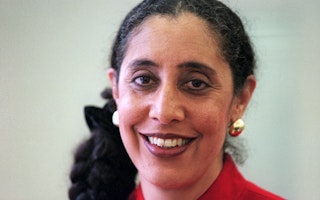
By Emily Maw
I first met John Thompson in 2003 when he had been out of prison for just a few weeks. In late 2005, John came to me and told me there needed to be a more robust program for helping Louisiana’s exonerees than the one Innocence Project New Orleans was able to provide.
It broke his heart to see men he’d been in prison with who were wrongly convicted, who’d survived the worst injustice imaginable, being broken by their struggle to survive in the “free world.” He had a concept for a residential facility that would also provide job training for exonerees coming home. But he didn’t want to just provide job training so that exonerees could be bus boys and janitors; he wanted to give them an opportunity to feel the pride of running businesses of their own. He felt that would provide a far better transition from prison and show the community and those in power the human face of the “collateral damage” of our careless criminal justice system.
I was sold, as have been so many others who have met John. Not because of the brilliance of the idea alone, but because John is an inspired man who cannot rest while he sees others struggling who have been through what he did. That’s why he founded Resurrection After Exoneration. We’ve worked together for nearly six years now as he has successfully pursued his dream of providing his fellow exonerees with shelter, help, and dignity.
When he sued the prosecutors who covered up evidence and nearly got him executed for a crime he did not commit, a civil jury in New Orleans awarded him $14 million—one million for each year he spent under sentence of death. That jury listened to John’s testimony, the testimony of all the prosecutors involved, and the testimony of a special prosecutor from New Orleans District Attorney Harry Connick Sr.’s office who investigated the evidence cover-up in John’s case.
The jury sided with John, and an appeals court affirmed that verdict. Two weeks ago, the U.S. Supreme Court reversed those decisions. In a New York Times op-ed on Sunday, John speaks at length about the recent ruling. The Court’s ruling ignored the facts of John’s case and the sorry history of evidence-withholding at the New Orleans District Attorney’s Office. The bigger meaning of the decision is, of course, that there is now absolutely no accountability for prosecutors who withhold evidence in criminal cases. It was a sad day for justice, and a sad day for those of us who work for a fairer, higher quality and more accountable system. But mostly it was a sad day for John Thompson.
Incredibly, John faced the media that day with the same courage that I believe he showed when faced—repeatedly—with his own execution. He exhibited grace and humility far beyond that which most of us would. All he cared about was making sure people didn’t focus too much on his case. As he faced the cameras, he tried to use the opportunity to remind people everywhere that there were hundreds of men behind bars who didn’t have lawyers to review their cases—some were his friends; others, he never even met.
John has more kindness in him than all of the prosecutors together who ignored the law and his humanity to try to get him killed in the name of their careers. In the end, though John is the winner. He sleeps at night. My hope is the same as his: that one day there will be consequences for people who break the law to win convictions.
Emily Maw is director of the Innocence Project New Orleans, a grantee of the Open Society Foundations.