The Attack on the San Diego Mosque Is Not an Isolated Incident
By Laleh Ispahani

Yesterday, two gunmen opened fire at the Islamic Center of San Diego—the largest mosque in San Diego County. A security guard at the mosque and two staff members of the Islamic school on its grounds are dead. Police say the bravery of the guard, Amin Abdullah, a father of eight, kept the toll from being higher. The full picture is still unfolding in what police are investigating as a hate crime.
But some things we can say clearly. This attack did not happen in a vacuum. It follows a long and painful line of violent acts in the United States targeting Muslim communities and other racial and ethnic minorities—in houses of worship, in public spaces, and in everyday life. That context is undeniable, and it demands a response.
That response starts with solidarity.
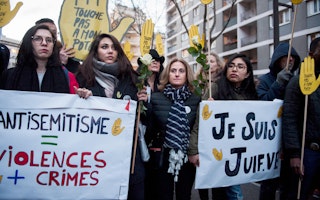
There is a persistent and dangerous myth that what happens to one community stays contained to that community. That violence or bigotry against a minority group—Muslims, Jews, people of color, immigrants—can be walled off from the concerns of the broader population. But the truth is that when a mosque is attacked, or a synagogue is targeted, or any group of people is made to feel that their safety is conditional and their belonging is negotiable, the damage radiates outward. The fear and anguish felt by children and parents after yesterday’s shooting echoes the deep sorrow of families who endured the attack against Temple Israel, a synagogue in West Bloomfield, Michigan, two months ago. These attacks fray the social fabric that protects all of us. Ultimately, our shared safety, and our country, are weakened.
“We must treat an attack on a mosque or a synagogue or any house of worship as an attack on all of us.”
I have seen this result firsthand.
I grew up in Bangladesh, Pakistan, and Iran. I was a child during revolution, war, and sectarian violence, watching governments that seemed stable come apart with terrifying speed. I saw how quickly ordinary life could be upended—how neighbors turned on neighbors, and how institutions that were supposed to protect people became instruments of fear. These were not abstract political events; they were the texture of my childhood.
When I was a teenager, my family moved to the United Kingdom. It was the 1980s, and race riots were erupting across Britain’s major cities. The tension was palpable and the violence was real. What struck me then, and has stayed with me since, was how quickly the vilification of one community could destabilize an entire society.
These experiences gave me a bone-deep understanding that democracies are not permanent. They are fragile. They require active maintenance. And the fuse that most reliably burns them down is racial and ethnic scapegoating—the decision, often made by those in power, to define some people as threats and others as worth protecting.
It is no secret that when communities are portrayed as foreign, as dangerous, as other, some people will act on that framing. They have before. They will again, unless we change the conditions that make this violence possible.
Americans must choose to see themselves as one community. We must show up for populations that are not our own. We must treat an attack on a mosque or a synagogue or any house of worship as an attack on all of us. In the streets of this nation and in its halls of power, we must recognize and make clear that our American family is indivisible—that its promise of liberty and justice belongs to us all.
The United States is no stranger to this kind of violence, or to the reckoning that comes after. Racial and ethnic discrimination is woven into our history: in the persecution of Native peoples, in slavery and its long aftermath, in the incarceration of Japanese Americans, in the assassinations of civil rights leaders who called for equal dignity. In every generation and at every moment, we are called to choose whether to reckon with that history, or to repeat it.
We have not always made the right choice. At times, we have sought to whitewash our complex history in the name of unity or patriotism or national pride. Some leaders have called on us to ignore these defining incidents as inconvenient counternarratives to our national story. But at those moments when we have made the right choice—when Americans have linked arms across lines of faith and race and background—we have built something stronger than what came before. That is the promise of this country. It is a promise worth fighting for.
Less than a week before yesterday’s tragedy, the Open Society Foundations announced a $30 million initiative to counter antisemitism and anti-Muslim hate. I’m proud of that effort. Funding matters. Legal defense and research and interfaith coalition-building matter. But the truth is that these do not work without the willingness of every American—regardless of faith or background—to say clearly: This is not who we want to be.
To the community of the Islamic Center of San Diego: You are not alone. What happens to you matters to all of us. And when we hold that truth and stand together, we help create the democracy we all deserve.

Laleh Ispahani is managing director of Programs at the Open Society Foundations.