Why Catalytic Capital Matters Now More Than Ever
By Georgia Levenson Keohane

Inclusive economic development and democracy go hand in hand. For open societies to thrive, people need to have a meaningful stake in their economy, in their politics, and in their collective future. We’ve seen that voters across the globe are increasingly dissatisfied with how their governments are delivering on economic opportunity and well-being; it’s clear we need to do better. To address the challenges facing democracy and open society, we must place shared prosperity front and center.
This is why the work of the Soros Economic Development Fund (SEDF) matters. As the economic development and impact investing arm of the Open Society Foundations, SEDF was founded on the premise that economic development, opportunity, and inclusion are essential building blocks of well-functioning and democratic societies.
At SEDF, we deploy what we call “catalytic capital”—patient, risk-tolerant, and mission-driven investments. Like grants, these investments lead with impact and charitable purpose, not financial returns. Unlike grants, they're typically recycled over time for re-investment. Free from the requirements of outside or commercial investors, we can lean into areas of market and political failure and risk that others can’t or won’t.

This type of capital is especially important now. The upending of the global development and climate finance architecture, the chill in capital market enthusiasm for sustainable finance, and the broad challenges to democracy and open society require an all-hands-on-deck response. Philanthropy has an important role to play, but its resources are small compared to the those of the public and private sectors. To address entrenched challenges at scale, it is essential to harness the power of markets and marry that private capital to public purpose.
Our Priority Areas
In the last few years, SEDF has pursued three initial areas of work where we believe impact investments can be particularly catalytic—climate and inclusive development, independent media, and reproductive rights—with new areas under development.
SEDF invests at the intersection of climate and inclusive, sustainable development and democracy, focused on locally-led green growth in emerging markets and the Global South. SEDF’s climate work has two pillars:
- just, inclusive energy transitions, focused on access to affordable green energy, job creation, and community resilience to climate change
- nature-based solutions that protect, restore, and manage ecosystems to benefit people and planet
Some of our recently-announced work to support climate action and inclusive development includes the Acumen Hardest to Reach Fund, which helps create clean and first-time energy access, and employment, in 16 of Africa's poorest countries by scaling off-grid solar; the Alliance for Green Infrastructure, an African-led climate infrastructure fund; and the Amazon Biodiversity Fund, which finances sustainable businesses in Brazil’s Amazon region that create jobs and preserve standing forests, improving livelihoods while reducing carbon emissions.
SEDF has a longstanding commitment to supporting independent media—freedom of expression, dissent, accountability, and the supply of trusted information—as a cornerstone of democracy and open society across the globe. We’ve invested nearly $30 million in the Media Development Investment Fund, which has in turn supported 140 newsrooms across 45 countries, reaching over 300 million people annually. We’ve also invested in innovative new models like the National Trust for Local News, which operates 65 newspapers in media deserts in the United States, and we’re working with other philanthropies and investors to address the public goods problems arising from technological and business model disruptions to the industry, including the collapse of local and investigative journalism, the rise of disinformation, and the erosion of public trust and civic engagement.
For decades, Open Society has played a critical role in defending reproductive health and rights in the U.S. and around the world. In the wake of the Dobbs decision, SEDF ramped up investments to protect access to safe, legal, and affordable contraception and abortion. We have also supported work with large corporates to help them understand just what’s at stake for them as employers—and why private sector partners are essential for advancing reproductive health and rights.
Partnership Is Central
Partners are central to everything we do. In most cases, we seek to de-risk investments to crowd in additional capital and allies—at the transaction level, via subsidy, and/or at the sector level by creating a “proof point” that reduces real and perceived risk for other investors.
“In these extraordinary times, Open Society has given SEDF not just the license, but the mandate, to try really hard things—to take risks others can’t or won’t.”
In every investment there is much to learn about a marketplace, a stubborn problem, what does and doesn’t work. That means listening to partners on the ground, including entrepreneurs, policymakers, and community leaders. Open Society has long engaged with the public and civil society sectors; SEDF advances impact by also engaging with the private sector—the “third leg of the stool.”
Why This Work Is Personal
I’ve spent more than twenty years at the intersection of responsible business and investment, innovative philanthropy, and public policy. Where mission meets markets, and public private partnerships are critical for addressing our most urgent challenges.
I grew up in New York in the 1970s and 80s, a challenging time for the city with deep structural and fiscal challenges and vicious cycles. And yet, it was also magical. New York is a place, but it is also an idea, and a set of ideals: a city whose vibrancy and dynamism have always derived from its diversity and the alchemy of pluralism. In our imagination, and sometimes even in reality, New York was, is, and could be an engine of economic and social mobility. That we fall short of those ideals, often and for many, does not mean that we don’t continue to strive for them as our North Star—in New York and around the world.
The Mandate to Try Hard Things
In these extraordinary times, Open Society has given SEDF not just the license, but the mandate, to try really hard things—to take risks others can’t or won’t.
At SEDF, we believe the greatest risk is inaction. Whether it's climate change or the deep economic and political challenges to our democratic systems, we must embrace, in Martin Luther King’s words: “the fierce urgency of now.”
And therefore the importance of capital for good: responsive and civic-minded business models and investments that work in partnership with governments, the private, and nonprofit sectors to address some of our most urgent challenges and support vibrant, inclusive, and sustainable democracies around the world.
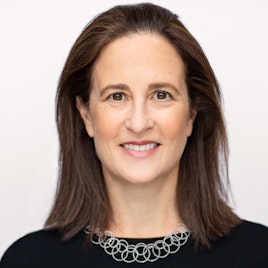
Georgia Levenson Keohane is chief executive of the Soros Economic Development Fund, Open Society’s impact investment fund.


