A Polish Dissident’s Journey from Political Prison to New York City
By Emil V.
There is a famous quote by a 19th century Polish poet who was exiled by the czar. When he left the country, the new landscape he saw reminded him of his homeland. Taking it in, he said, “Let’s go, nobody is calling.”
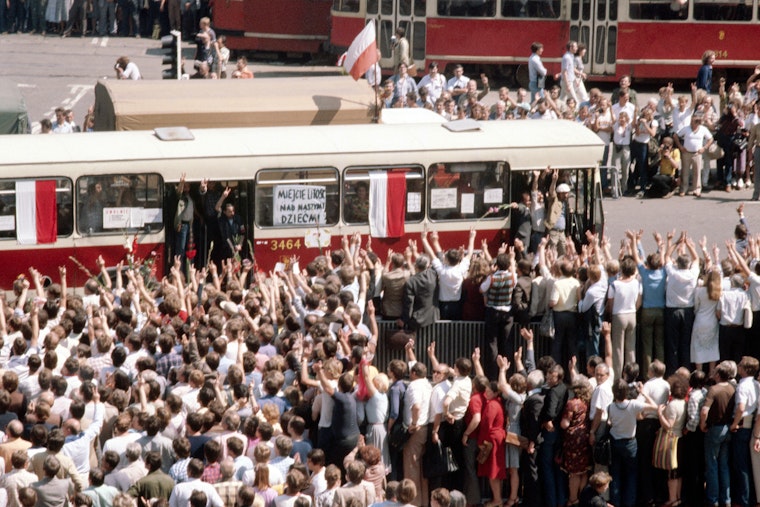
That quote captures my own story of fleeing a military crackdown in Poland to seek refuge in the United States over 30 years ago. On December 13, 1981, Poland’s military rulers declared a state of martial law. I was among thousands of opposition activists who were jailed as the government started arresting members of pro-democracy movements like Solidarity.
I was 26 at the time, living in Lublin, a town in southeast Poland. I somehow managed to escape the first round of arrests. But I was caught later, on February 17, 1982, when authorities raided a hideout I was working in with other dissidents. We were using it to publish an opposition paper called Solidarity Information Bulletin.
I spent a total of eight months and three days in prison—eight months and three days of horror that I still remember all too clearly.
The first two months of my incarceration were spent in Włodawa near the Poland–USSR border. It was a horrible place—I will never be able to forget the brutality of the guards. Later I was moved to a prison in Lublin, a more humane facility. I ultimately ended up in Kwidzyn for the final months of my detainment, among 1,500 other political prisoners.
When I was released on October 17, the secret police were monitoring my every step, pushing me out of the country. At that moment, it wasn’t clear that communist rule was weakening. The regime was still dangerous, and blindly aggressive.
The U.S. government at the time had established a special program to receive Polish political refugees. The process was almost automatic, with very little bureaucracy involved. I was first given a visa to West Germany, where I was interviewed by people who spoke funny Polish. They asked strange questions, like whether I had ever paid for sex or if I had ever been a member of the Communist Party. But this was my ticket to escape the regime—as far as I was concerned, they could ask me anything they wanted.
In my mind, the United States was the land of immigrants, a place where I knew I would be welcomed. Moving to New York confirmed this. This city has been built by the hands and minds of many peoples—among them migrants and refugees like me.
In New York, I never felt like a stranger. On the contrary, I felt embraced by the city and the people almost immediately. The poem engraved on the Statue of Liberty, “The New Colossus,” calls for the city to embrace people like me. Its message of acceptance and openness to people in need is something I’ve found to be absolutely true.
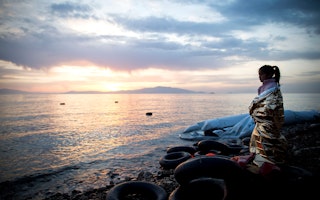
I am saddened by the harrowing images of refugees we see today, and the startling lack of compassion being shown to them. I have been through the same experience and know that these people have no ticket back. Had I stayed in Poland, I wouldn’t have survived. For them—just as for me 30 years ago—there is nowhere to return to.
Out of concern for the author’s privacy, his last name has been omitted.
Emil V. lives in New York City.